
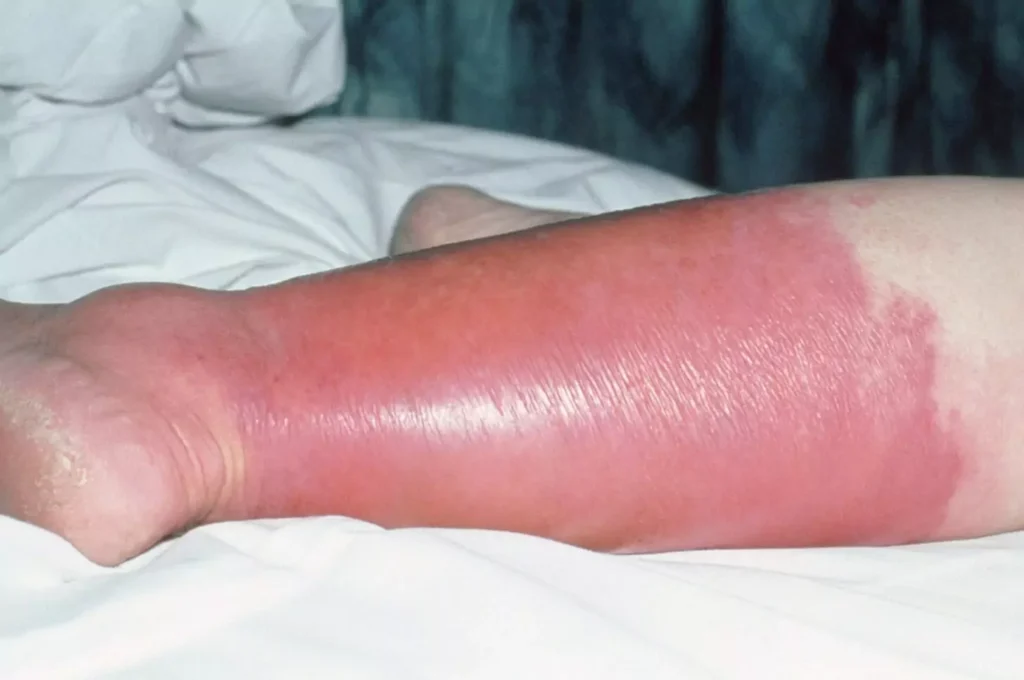
Cellulitis misdiagnosis is more common than most providers realize. Studies show that somewhere between 28 and 41 percent of patients diagnosed with cellulitis that actually have something else going on entirely. That means roughly 1 in 3 patients is walking out with the wrong diagnosis, and in a lot of cases, the right answer was right there if you just took a minute to work through your differentials.
The three diagnoses we see get missed most often are venous stasis dermatitis, DVT, and gout. They can all look like cellulitis on exam, and they all need a completely different workup and treatment plan. Here’s how to tell them apart.
TL;DR
Purpose: Help you build out your differential before landing on cellulitis in a patient with lower extremity redness and swelling.
Do this first: Look at both legs, ask about chronicity, check for a clear entry point, and think about whether the presentation actually fits a bacterial infection.
Red flags: Bilateral involvement, no entry point, joint-centered swelling, symptoms that come and go, DVT risk factors.
Initial checks: Both legs, timeline of onset, relevant medical history, entry point, joint involvement, vital signs.
First-line mindset: Redness and swelling don’t always mean infection. Work through your differential before you write the prescription.
Follow-up: If you do confirm cellulitis, mark the margins and give specific return instructions.
1. Venous Stasis Dermatitis
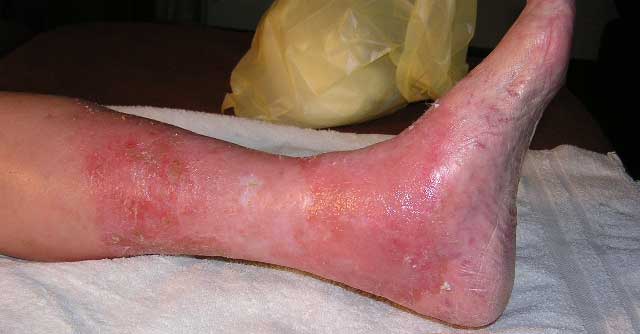
This is the most common cellulitis mimic, and it gets treated as an infection constantly. The skin changes look convincing, redness, swelling, warmth, maybe some tenderness, but the underlying problem is chronic venous insufficiency, not bacteria.
What it looks like:
- Bilateral lower leg redness and swelling
- Chronic skin changes: scaling, hyperpigmentation, thickened or leathery skin
- Symptoms that have been building gradually over time
- No clear entry point for bacteria
What’s common (and often normal):
- Some warmth and tenderness from chronic venous changes
- Swelling that worsens throughout the day and improves with elevation overnight
- Skin discoloration that has been there for a while
What’s not normal for true cellulitis:
- Bilateral presentation
- Gradual onset without an acute trigger
- History of CHF, chronic venous insufficiency, or kidney disease
- Symptoms present for weeks without systemic signs of infection
What to do:
Ask about a history of chronic venous disease or heart failure, look at both legs, and think about whether the timeline makes sense for a bacterial infection. True cellulitis is almost always unilateral with a clear starting point and acute onset. If those features aren’t there, think chronic issue first.
2. DVT

A DVT can look almost identical to cellulitis on exam. Unilateral leg swelling, warmth, redness, and tenderness, and it’s one of the more consequential misses you can make in the outpatient setting.
What it looks like:
- Unilateral leg swelling, warmth, and redness
- Calf or leg tenderness
- No obvious skin entry point or wound
- Symptoms that may have come on gradually
What to do:
If DVT is anywhere on your differential, run the Wells criteria before they go home. A few things that should push you in that direction:
- Swelling that extends above the knee or involves the whole leg
- Recent immobility, surgery, or travel
- Personal or family history of clotting
- No obvious skin findings consistent with infection
If their pretest probability isn’t low, they need imaging. Try to get them in for a same-day Doppler if you can. If that’s not possible within 24 hours, they probably need to go to the ER.
3. Gout

Acute gout gets called cellulitis more often than most people realize, especially when it affects the great toe, ankle, or foot. The joint turns red, swollen, and extremely tender, sometimes overnight, and it can look exactly like a skin infection on first glance.
What it looks like:
- Sudden, severe pain and swelling in or around a joint, most commonly the great toe, ankle, or foot
- Deep red to purple discoloration over the joint
- Extreme tenderness, even to light touch
- Possible history of prior gout attacks or hyperuricemia
What’s different from true cellulitis:
- Swelling and redness are centered around a joint rather than spreading diffusely through the skin
- Onset often comes on overnight or within hours
- No clear entry point for bacteria
- Uric acid may be elevated, though a normal level doesn’t rule it out during an acute attack
What to do:
Ask about prior gout attacks, diet, alcohol use, and medications that affect uric acid levels. If the presentation is joint-centered with no obvious entry point, gout belongs high on your differential. A joint aspiration showing negatively birefringent crystals under polarized light is diagnostic, but a clinical diagnosis with a trial of anti-inflammatory treatment is often reasonable in a patient with a classic presentation and prior history.
If It Actually Is Cellulitis
For uncomplicated cellulitis without abscess in an otherwise healthy outpatient, first-line treatment targets beta-hemolytic strep and MSSA.
First-line options: Keflex, amoxicillin, or dicloxacillin for five days.
Penicillin allergy: Clindamycin or a macrolide are reasonable alternatives.
A few things worth knowing:
- MRSA coverage isn’t recommended unless there’s a specific reason to suspect it, like a history of MRSA, recent hospitalization, living in a care facility, or failure to respond to initial antibiotics.
- Low-grade fever or mild tachycardia don’t automatically mean IV antibiotics. A patient who looks genuinely sick, altered mental status, true hypotension, just generally ill, is a different story. Use your clinical judgment!
- If they’re not improving within 48 to 72 hours, re-evaluate in office. Either your diagnosis is wrong, the antibiotic coverage isn’t right, or something more serious is going on. You can’t make that call without seeing the patient.
Mark the margins before they leave and give specific return instructions. Not “come back if it gets worse,” but an actual threshold.
If you want to talk through a case like this at the point of care, Blox IQ is a good place to start. You can ask something like “how do I tell gout from cellulitis?” or “how do I work up a patient with lower leg redness and swelling?” and get a structured answer fast.
And if breakdowns like this are helpful, join our Fast Track Friday list for a weekly email on clinical pearls, career tips, and more.